Credit Cards in Norway — Compared and Explained in English
We are a Norwegian comparison site, and our editorial team applies for, uses and tests these cards with our own money. Below you will find our current picks, what each card really costs, and a step-by-step account of the requirements foreign residents have to meet before a Norwegian issuer will say yes.

Oppdatert 9.9.2026
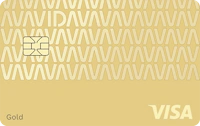
The best credit card in Norway in 2026 is:
Avida Gebyrfri Gold
The best all-round credit card in Norway in 2026 is the Avida Gebyrfri Gold — no annual fee, no cash withdrawal fees, included travel insurance and discounts in several stores. But if you have recently moved to Norway, the harder question is usually not which card is best. It is which card will actually approve you. This page covers both.
Annonslenke
Effektiv rente 23,4%, 15 000 over 12mnd, kostnad kr 1 780, totalt kr 16 780
Sideinnhold
Best credit cards in Norway 2026, by category
Our picks are unchanged from our Norwegian editorial ranking. Each card below is rated on benefits, insurance, travel value, fees, approval rate and customer feedback.
Best card with no annual fee
Best card for travel
Best card for discounts
Best low-interest card
Best card for insurance

Best card with no annual fee: TF Bank Mastercard
TF Bank Mastercard has no annual fee and no cash withdrawal fee, and comes with several included insurance policies plus retail discounts through the DealPass programme. It supports Apple Pay and Google Pay. The nominal interest rate is 22.65% and the effective rate 26.69%, with 43 interest-free days.
One point worth knowing before you apply: TF Bank's minimum credit limit is NOK 30,000. That is higher than some competitors and matters for your total debt calculation — see the section on Norwegian lending rules below.
- DealPass rabatter
- Flere komplette forsikringer inkludert
- Ingen årsavgift

Sammenlign kort
Eff. Rente 26,69% kr 25.000/12 mnd, kost. 3 337 totalt kr. 28 337

Best card for travel: Bank Norwegian kredittkort
Bank Norwegian is our travel pick. There is no annual fee, no fee on cash withdrawals in Norway or abroad, and a currency surcharge of 1.75% — low by Norwegian standards. You earn either CashPoints or cashback on every purchase, and you can switch between the two in the app. CashPoints can be redeemed for flights with Norwegian. Travel and cancellation insurance from Tryg is included, subject to the payment conditions described further down.
- 0 kr i årsavgift og ingen uttaksgebyr
- Velg selv mellom CashPoints og cashback – kan byttes i appen
- Gebyrfrie kontantuttak med rentefrihet frem til forfall
- Reise- og avbestillingsforsikring fra Tryg
- Høy kredittgrense på inntil 150 000 kr

Sammenlign kort
Effektiv rente 24,4 %, 15 000 kroner over 1 år. Kostnad: 1 849 kroner. Total: 16 849 kroner.
Best card for discounts: Avida Gebyrfri Gold
Avida Gebyrfri Gold gives you discounts on many thousands of goods and services, primarily from Norwegian retailers, plus free travel and cancellation insurance. One of the things that makes Avida Gebyrfri Gold interesting is the fees it doesn't charge. It is one of the few Norwegian credit cards that has almost no fees at all.
- Gode rabatter via Dealpass
- Gratis reise- og avbestillingsforsikring
- Egenandelsforsikring for leiebil
- Ikke gebyr på uttak av kontanter
- Ikke årsgebyr
Sammenlign kort
Effektiv rente 23,4%, 15 000 over 12mnd, kostnad kr 1 780, totalt kr 16 780
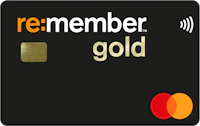
Best low-interest card: re:member Gold
re:member Gold carries a nominal interest rate of 18.50% and an effective rate of 20.15% — the lowest in our top list. There is no annual fee and no cash withdrawal fee, and you can apply for a payment-free month. The trade-off is that the card carries very little in the way of rewards, insurance or travel benefits. It is a card for borrowing cheaply, not for earning.
- Ingen årsavgift
- Lav nominell rente sammenlignet med mange konkurrenter
- Høy kredittramme (inntil 150 000 kr)
- Ingen gebyr på kontantuttak
- Enkel app og nettbankløsning
Sammenlign kort
Effektiv rente 20,15 %, 15 000 kr over 12 måneder. Kostnad 1 215 kr. Totalt 16 215 kr.

Best card for insurance: Morrow Bank kredittkort
Morrow Bank includes travel and cancellation insurance plus purchase protection and ID theft cover. No annual fee, no cash withdrawal fee, and 50 interest-free days — the longest in this list. Nominal 24.90%, effective 28.77%. Note that Morrow Bank discontinued its cashback and bonus programme on 1 May 2026, so this card is now about protection rather than rewards.
- Gratis reise- og avbestillingsforsikring
- Gratis ID-tyveri- og kjøpsforsikring
Sammenlign kort
Eff. Rente 28,77% kr 12.000/12 mnd, kost. 1 726 totalt kr. 13 726
Summary of the Best credit cards
- Best card with no annual fee: TF Bank Mastercard
- Best card for travel: Bank Norwegian kredittkort
- Best card for discounts: Avida Gebyrfri Gold
- Best low-interest card: re:member Gold
- Best card for insurance: Morrow Bank kredittkort
Summary comparison
The Best Credit Cards in Norway 2026 at a Glance
| Credit card | Best for | Annual fee | Effective interest rate | Interest-free days |
|---|---|---|---|---|
TF Bank Mastercard | No fees, insurance, discounts | NOK 0 | 26.69% | 43 |
Bank Norwegian | Travel and everyday use | NOK 0 | 24.40% | 45 |
re:member Gold | Lowest interest | NOK 0 | 20.15% | 45 |
re:member black | Retail discounts | NOK 0 | 29.89% | 45 |
Morrow Bank Mastercard | Included insurance | NOK 0 | 28.77% | 50 |
How we test credit cards
Most comparison sites read the terms and stop there. We apply for the cards, use them, and write up what actually happened — including the parts issuers would rather we left out.
- We hold the cards: Our editorial team applies with our own money and uses the cards in everyday spending and while travelling.
- We check the terms against primary sources: Fees and rates are cross-checked against Finansportalen and each issuer's own SEKKI document, not against other comparison sites.
- We track real approval rates: The approval figures below come from applications actually submitted through our site over the last 30 days.
- We rate on six criteria: rewards and benefits, insurance, travel value, fees and interest, approval rate, and customer feedback.
We earn commission from some partners when you apply through our links. This is how the service stays free, and it does not affect our ratings, rankings or recommendations.
How to get a credit card in Norway as a foreigner
This is the part most comparison pages skip. If you have recently moved to Norway for work or study, meeting the "best card" criteria is irrelevant until you meet the approval criteria.
What Norwegian issuers require
- A Norwegian national identity number (fødselsnummer).
In practice this is the biggest hurdle. You are assigned a fødselsnummer when you are registered as resident in the National Population Register, which normally requires a residence permit or right of residence of six months or more. A temporary D-number is not usually enough on its own for unsecured credit — most issuers require you to be registered as resident. A few will assess a D-number application manually if your income, identity documentation and Norwegian credit data are strong, but you should expect a rejection as the default outcome. - BankID
Every credit card application in Norway is signed electronically with BankID, which is issued through a Norwegian bank. Without BankID you cannot complete an online application at all. This means opening a Norwegian bank account is effectively step one. - Documented income in Norway
Issuers typically require a minimum gross annual income, usually somewhere between NOK 100,000 and NOK 250,000 depending on the card, verified against the Norwegian Tax Administration. - Norwegian credit history
This is where foreign applicants are most often caught out. Your credit history from your home country does not transfer. Norwegian issuers assess you against Norwegian tax returns and the national debt register (Gjeldsregisteret). Many newcomers need at least one, and often two, full Norwegian tax years before an application succeeds. - No payment defaults (betalingsanmerkninger)
An active default results in automatic rejection, with no exceptions. - Age
The legal minimum is 18, but several cards set the bar at 20, 23 or 25.
The lending rules that decide the outcome
Under the Norwegian lending regulation (utlånsforskriften), your total debt — including credit limits you have not used — may not exceed five times your gross annual income. Credit card limits below NOK 30,000 are exempt from this calculation, which is why some issuers will offer a newcomer a small limit rather than reject outright.
The practical consequences:
- An unused NOK 100,000 limit on an existing card counts against you on the next application. Close cards you do not use.
- If you are offered a lower limit than you asked for, that is often the regulation at work, not a judgement on you.
- Applying to several issuers in a short period does not usually harm you the way it does in some other countries, but each application triggers a credit check that is visible to you and to the issuer.
A realistic timeline
- Month 0–1: Register with the Tax Administration, get your fødselsnummer, open a Norwegian bank account, get BankID.
- Month 1–6: Use the account. Have your salary paid into it. Use a debit card. You are building a Norwegian financial footprint.
- After your first Norwegian tax return: Your income becomes verifiable in the systems issuers query. This is usually the earliest realistic point for an application.
- If rejected: Wait, reduce or close unused credit lines, and reapply. Ask the issuer for the reason — under Norwegian law you are entitled to know the basis for a credit refusal.
Can tourists get a Norwegian credit card?
No. You must be resident in Norway with a Norwegian identity number. If you are visiting, use your existing card — Visa and Mastercard are accepted almost everywhere in Norway, including contactless and mobile payments. Norway is close to cashless; you will rarely need physical cash.
One tip that will save you money: when a payment terminal offers to charge you in your home currency instead of NOK, decline. That is dynamic currency conversion, and the exchange rate is almost always worse than your own bank's.
Cards with the highest approval rate
These are the five cards that approve the most applications submitted through Bestekredittkortet.com. Approval always depends on your individual finances, but if you are a borderline applicant, these are the sensible places to start.
Kort
Godkjenningsgrad
 Bank Norwegian kredittkort
 Avida Gebyrfri Gold
 re:member Gold
 TF Bank Mastercard
 re:member black
What a Norwegian credit card actually costs
Norwegian credit cards are unusual in one respect: annual fees are rare. Every card in our top list costs NOK 0 a year. The cost sits elsewhere.
- Interest: Effective rates on Norwegian consumer credit cards typically run between roughly 20% and 30%. If you clear the balance in full each month, you pay none of it. If you do not, it compounds quickly.
- The interest-free period: Between 43 and 50 days on the cards above, counted from the start of the billing period rather than from your purchase date. The number quoted is the maximum, not what you get on every purchase.
- Currency surcharge (valutapåslag): 1.75% to 2.00% on the cards above, applied on top of the exchange rate when you spend in a foreign currency. Over a year of travel this often costs more than any annual fee would.
- Cash withdrawals: Several Norwegian cards charge nothing for the withdrawal itself, but interest usually starts accruing from the withdrawal date, with no interest-free period. The same applies to bank transfers and bill payments made from a credit card.
- Invoice and reminder fees: Typically NOK 8–10 per paper invoice, NOK 0 with e-invoice, and NOK 35–38 for a payment reminder.
The nominal rate is the base interest rate. The effective rate (effektiv rente) includes fees and compounding and is the figure to compare — Norwegian issuers are required to disclose it.
Included travel insurance: read the payment rule first
Free travel insurance is the headline benefit on several Norwegian cards, and it is genuinely valuable. But it only activates if you pay for the trip in a specific way, and that rule has recently become stricter.
Bank Norwegian changed its terms on 1 August 2026. For trips booked on or after that date, at least 75% of the trip's combined transport and accommodation costs must be paid directly with the Bank Norwegian card. The previous rule was more than 50% of transport costs only. Payment must go directly to the airline, hotel, travel agency or equivalent supplier — paying a private individual who then books, or routing payment through certain third-party services, may not count. Trips booked before 1 August 2026 remain under the old terms.
The practical trap: if you book the flights on your Bank Norwegian card but a travel companion pays the hotel with a different card, you may fall below the 75% threshold and lose cover for the whole trip.
Requirements differ between issuers, so check the terms for your specific card rather than assuming a common standard. Note also that on Bank Norwegian's included cover, travel illness, repatriation, cancellation and accident cover ends at age 75.
If you travel often, or with people outside your immediate family, an annual travel insurance policy is usually the safer choice. Card-included cover is tied to the individual trip and is not a substitute for a standalone policy.
Credit card or debit card?
A debit card takes the money from your account immediately. You can only spend what you have. A credit card lets you borrow up to a set limit and pay later.
Two practical differences matter in Norway:
- Consumer protection: Under the Norwegian Financial Contracts Act (finansavtaleloven), paying by credit card gives you stronger rights if the seller goes bankrupt, never delivers, or delivers something significantly defective. You can raise a claim against the card issuer. This protection does not apply to debit cards in the same way, and it is the single best argument for paying with credit for anything expensive, prepaid or bought online.
- Benefits: Insurance, cashback, points and retail discounts are almost exclusively attached to credit cards.
Visa, Mastercard and American Express in Norway
Visa and Mastercard are accepted essentially everywhere in Norway. American Express is a different picture: it works at larger hotels, airlines and several chains, but acceptance drops sharply at smaller merchants and in grocery stores. If Amex is your only card, you will run into refusals. As a visitor or a newcomer, carry a Visa or Mastercard.
Using a credit card sensibly
- Pay the full balance by the due date: This is the whole game. Do this and the card is free credit; fail to do it and the interest rate makes it one of the most expensive ways to borrow money available to you.
- Avoid cash withdrawals: Interest usually starts the same day, even where the withdrawal fee is zero.
- Check the travel insurance payment threshold before you book, not after. On Bank Norwegian that is now 75% of transport and accommodation.
- Do not hold cards you do not use: Unused credit limits count against your total debt under utlånsforskriften and will reduce what you can borrow later — including on a mortgage.
- Pay more than the minimum: The minimum payment is designed to keep the balance outstanding.
Credit cards are not right for everyone. If you find it difficult to keep track of spending, or you are already carrying consumer debt, a debit card is the better tool. If you are struggling with debt, the Norwegian state offers free financial counselling through NAV's økonomisk rådgivning service.
Frequently Asked Questions
Can I get a credit card in Norway as a foreigner?
Can I get a credit card with only a D-number?
Do I need a Norwegian bank account first?
Which bank is best in Norway for foreigners?
Is it worth getting a Norwegian credit card?
Which credit card is most recommended in Norway?
Can I use my foreign credit card in Norway instead?
What is the interest-free period?
Can I get a card without a credit check?
How high can my credit limit be?
What is the difference between nominal and effective interest?
17 000+
Customers who have been approved for a credit card
100+
Objectively reviewed credit cards
40 000+
Monthly visitors
Here’s a selection of our partners


